English
 English

 Home
HomePVC Garden Hose Extrusion Line
A PVC garden hose extrusion line builds a hose in three layers in one continuous pass: a soft PVC inner tube, a braided reinforcement of polyester yarn or steel wire, and a PVC outer coating. The braid is the product. It sets burst pressure, kink resistance and how long the hose survives outdoors, and it is controlled by carrier count and tension rather than by anything the extruder does.
A hose line can hold diameter to specification down the whole length and still make a hose that splits at half its rated pressure. Braid density that drifts during a run, or an outer layer that sits on the mesh instead of keying into it, produces a hose that passes a dimensional check and fails a pressure test.
Tell us the diameter range, the working pressure you need to reach, and whether the reinforcement is polyester or steel wire. Those three answers set the carrier count, the number of extruders and the cooling length before anything else is specified.
Reinforced or Single-Layer: Two Hoses, Two Lines
Buyers usually arrive asking for a garden hose line and mean one of two quite different machines. The reinforcement decides how many extruders the line carries and how long it is, so it is worth settling first:
| Hose type | Structure | Typical use |
|---|---|---|
| Single-layer hose | One extruded PVC wall, no reinforcement | Light garden watering, drainage, low-pressure transfer |
| Braid-reinforced hose | Soft PVC inner tube, polyester braid, PVC outer coating | Garden and agricultural irrigation, household water supply |
| Steel-wire reinforced hose | Soft PVC inner tube, steel wire braid, PVC outer coating | Industrial fluid delivery, suction and higher pressure |
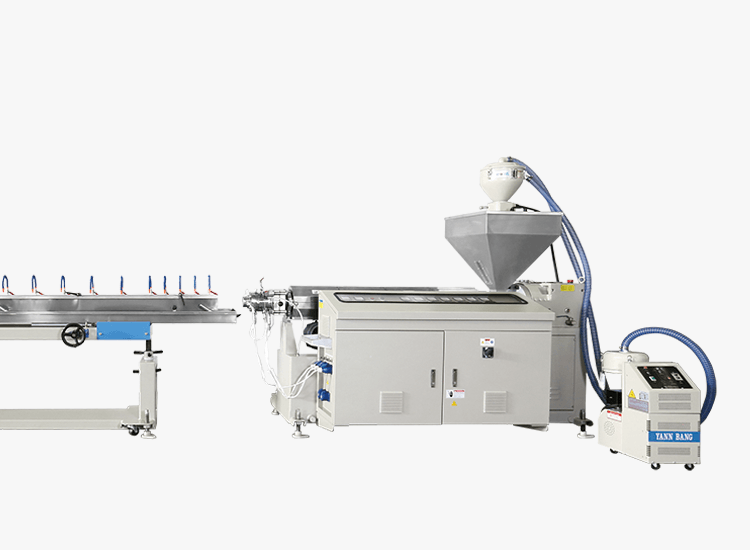
A single-layer hose needs one extruder, a cooling tank, a haul-off and a winder. Adding reinforcement adds a braiding machine, a heating box and a second extruder for the coating. Our standard configuration covers 6 mm to 75 mm diameter with 24 to 64 braiding carriers, so one line carries a range from light garden hose through to industrial delivery hose.
What a Garden Hose Line Produces
One line covers a family of hose products, separated by the reinforcement and the outer compound rather than by the machine:
- Garden and agricultural irrigation hose. Polyester braid, transparent or colored outer wall, optional stripes.
- Household water supply hose. The same construction with a tighter tolerance on inside diameter so standard fittings seal.
- Air compressor and cooling water hose. Higher carrier counts to reach the working pressure.
- Industrial fluid delivery and construction hose. Steel wire reinforcement for pressure and for suction.
- Food-grade and medical-grade hose. Optional, with compound and process changes settled at the quotation stage.
Two options change the economics rather than the product. Co-extrusion lets a recycled middle layer sit between virgin inner and outer walls, which cuts material cost without touching the surface the water contacts or the surface the customer sees. In-line printing marks length, brand and pressure rating as the hose runs, so it leaves the line ready to pack.
How a PVC Garden Hose Is Made
A complete PVC garden hose extrusion line runs six stations, each sized against your pressure target rather than your output target:
- Material drying and feeding. Soft PVC compound is dried and fed automatically into the extruder throat. Moisture left in the compound shows up as voids in the inner wall, and a void in the inner wall is where a burst starts.
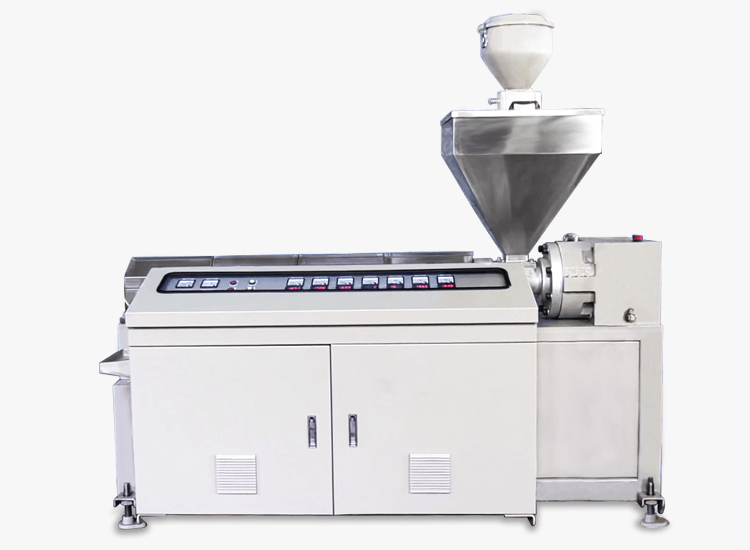
- Inner layer extrusion. A single screw or twin screw extruder melts the compound and forms the inner tube through a die head and sizing sleeve. Co-extrusion at this station is what makes a multilayer or recycled-core structure possible.
- Reinforcement braiding. A high-speed braiding machine lays 24 to 64 carriers of polyester yarn or steel wire evenly over the tube. Braid angle and tension set burst pressure, and both are held by tension control throughout the run rather than adjusted once at the start.
- Outer layer extrusion. A second extruder coats PVC over the braid. The heating box before this station keeps the braided tube warm enough for the coating to key into the mesh instead of sitting on top of it, which is what stops the layers separating in service.
- Cooling and sizing. A stainless steel cooling tank stabilizes diameter and roundness while the wall sets. Cooling length rather than extruder size is usually what limits how fast a reinforced hose can run.
- Haul-off, printing, cutting and winding. A belt or caterpillar haul-off pulls at a speed matched to extrusion, the printer marks the hose in line, and the automatic cutter and winder finish to roll length. Line speed is typically 6 to 15 m/min depending on diameter and carrier count.
All six stations run from one PLC control system that synchronizes extruder output, braiding tension and haul-off speed, and stores recipes so a change of diameter is recalled rather than dialed in again. Screws and barrels are 38CrMoAlA alloy steel with nitriding treatment, and the electrical components are Siemens, Omron and Schneider.
FAQ
What is a PVC garden hose extrusion line?
A PVC garden hose extrusion line melts soft PVC compound and forms it into a three-layer hose: an extruded inner tube, a braided polyester or steel wire reinforcement, and an extruded PVC outer coating. A complete line runs six stations: drying and feeding, inner layer extrusion, braiding, outer layer extrusion, cooling, and haul-off with printing, cutting and winding.
What is the difference between a reinforced hose and a single-layer hose?
The braid. A single-layer hose is one extruded wall with limited pressure resistance. A reinforced hose carries a braided layer between an inner tube and an outer coating, which raises burst pressure and tensile strength enough for irrigation, household supply and industrial delivery.
How many braiding carriers does a garden hose need?
Between 24 and 64, depending on the working pressure. More carriers give a denser mesh and a higher burst pressure at the same wall thickness, at the cost of line speed. We size the braiding machine against the highest pressure in your range, not the most common one.
Can the line run steel wire instead of polyester?
Yes. A steel wire braiding machine produces hose for higher pressure and for suction applications. The extruders, die head and winder stay the same, while cooling and haul-off are set differently for the heavier reinforcement.
Can a recycled layer be used?
Yes, through co-extrusion. A recycled middle layer sits between virgin inner and outer walls, so material cost drops while the water-contact surface and the visible surface stay virgin compound.
What do you need to quote a hose line?
Three things: the hose diameter range, the working pressure, and whether the reinforcement is polyester or steel wire. Tell us whether you need in-line printing or a recycled layer and we will specify the co-extruders and the downstream stations with the line.
Related Machines