 English
 English


 Home


Parallel Counter-Rotating Twin Screw Extruder: The Ultimate Guide to PVC Pipe and Profile Production
The parallel counter-rotating twin-screw extruder is the industry standard for the extrusion of rigid PVC (U-PVC) pipes and profiles. This dominance is backed by definitive mechanical principles. Understanding these core mechanics allows plant owners and factory managers to cut through the noise of competing machine models and pinpoint the exact equipment configuration that aligns with their production lines and formulation requirements. This comprehensive guide dissects how these machines operate, contrasts their technology against co-rotating and conical counter-rotating systems, and highlights the critical specifications you must verify before making a capital investment.
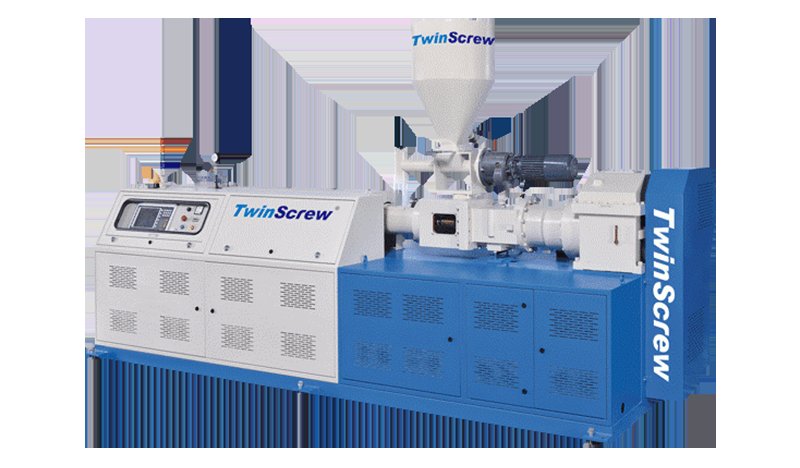
Operating Principles and Technical Advantages of Parallel Counter-Rotating Twin Screw Extruders
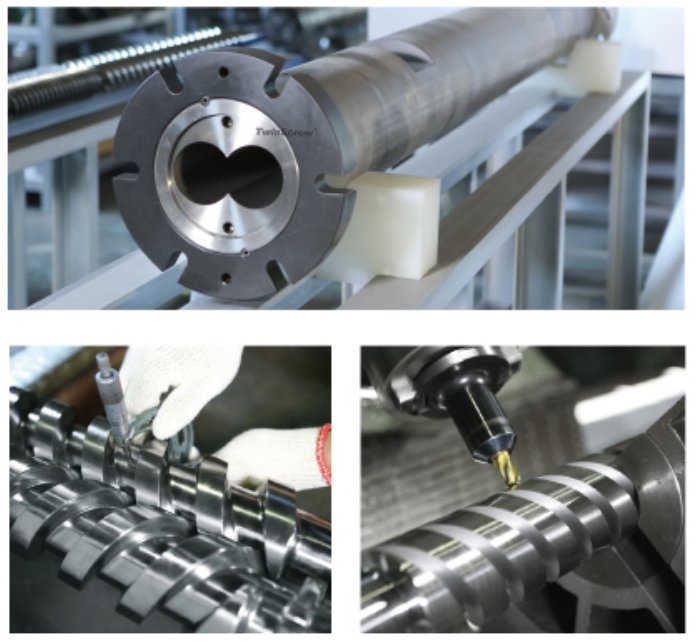
To understand why this specific machinery configuration dominates global PVC pipe and profile manufacturing, we must look directly at the physical and mechanical behavior occurring between the twin screws. In a parallel counter-rotating system, two screws of identical and uniform diameter throughout their entire length are placed side-by-side inside a precision-machined, figure-8 shaped barrel. These screws rotate in opposite directions—one clockwise, the other counter-clockwise.
As the intermeshing flight profiles rotate against each other, they capture the PVC compound within enclosed, C-shaped chambers. The material is then steadily propelled forward toward the die head. These chambers function essentially like high-pressure gear pumps. The compound is transported entirely via a positive displacement mechanism rather than relying on frictional drag—this is the fundamental thermodynamic and mechanical distinction between counter-rotating twin screws and single screws or co-rotating twin screws.
Eliminating the Risk of Batch-to-Batch Viscosity Variations
This fundamental difference in transport mechanics delivers immediate, tangible benefits on the continuous production floor. Because a positive displacement mechanism decouples die pressure generation from screw speed, the output pressure remains exceptionally stable even if your formulation's viscosity fluctuates slightly between raw material batches.
Such variations are common in Polyvinyl Chloride (PVC) formulations heavily filled with Calcium Carbonate (CaCO3). For rigid PVC pipe production, where wall thickness tolerances are strictly regulated by international standards like ISO 4422 and ASTM D1785, this superior pressure stability is the key to maintaining consistent product specifications across every shift and preventing out-of-tolerance rejects.
Precision Control over "Shear Heat" to Protect Thermally Sensitive PVC
The second core advantage lies in the meticulous management of shear forces. The shear input generated by intermeshing counter-rotating screws is significantly lower than that of co-rotating twin-screw extruders of equivalent output capacities.
Rigid PVC is highly sensitive to excessive shear heat; its "thermal window"—the narrow margin between its processing temperature and its degradation threshold—is unforgiving. If the melt temperature spikes beyond safe limits, it triggers immediate yellowing, embrittlement, and a severe drop in the impact strength of the final product. The parallel counter-rotating design keeps the melt temperature safely stabilized within the ideal processing window. As a result, processing plants can avoid adding expensive over-stabilization additives simply to compensate for excess heat generated by the extrusion process itself. This precision engineering is a design hallmark that our engineering team has continually validated across more than 1,200 installations running in over 40 countries.
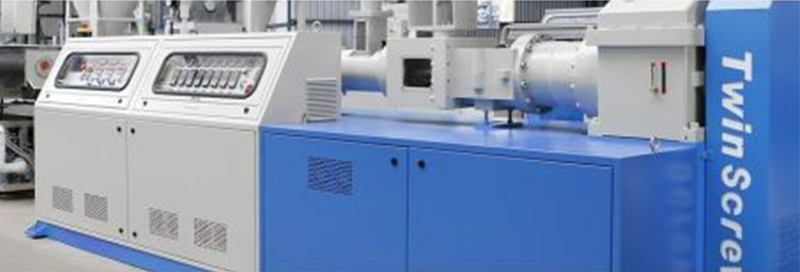
Why the Parallel Counter-Rotating Design Dominates PVC Building Material Processing
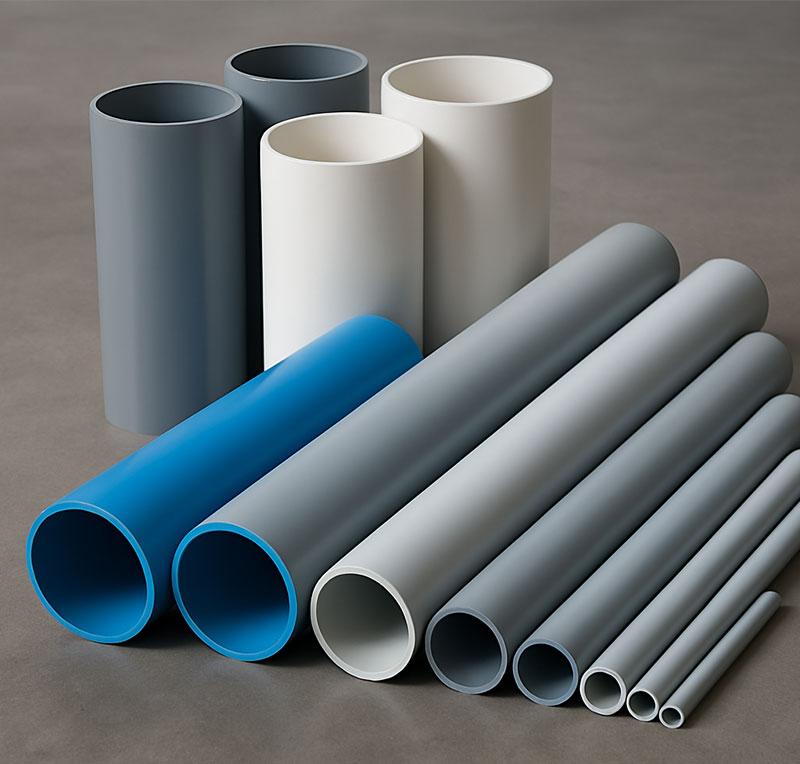
Having established the underlying mechanics, let’s examine three practical operational reasons why parallel counter-rotating twin-screw extruders are the standard choice for global production lines manufacturing PVC pipes, window profiles, door frames, and siding.
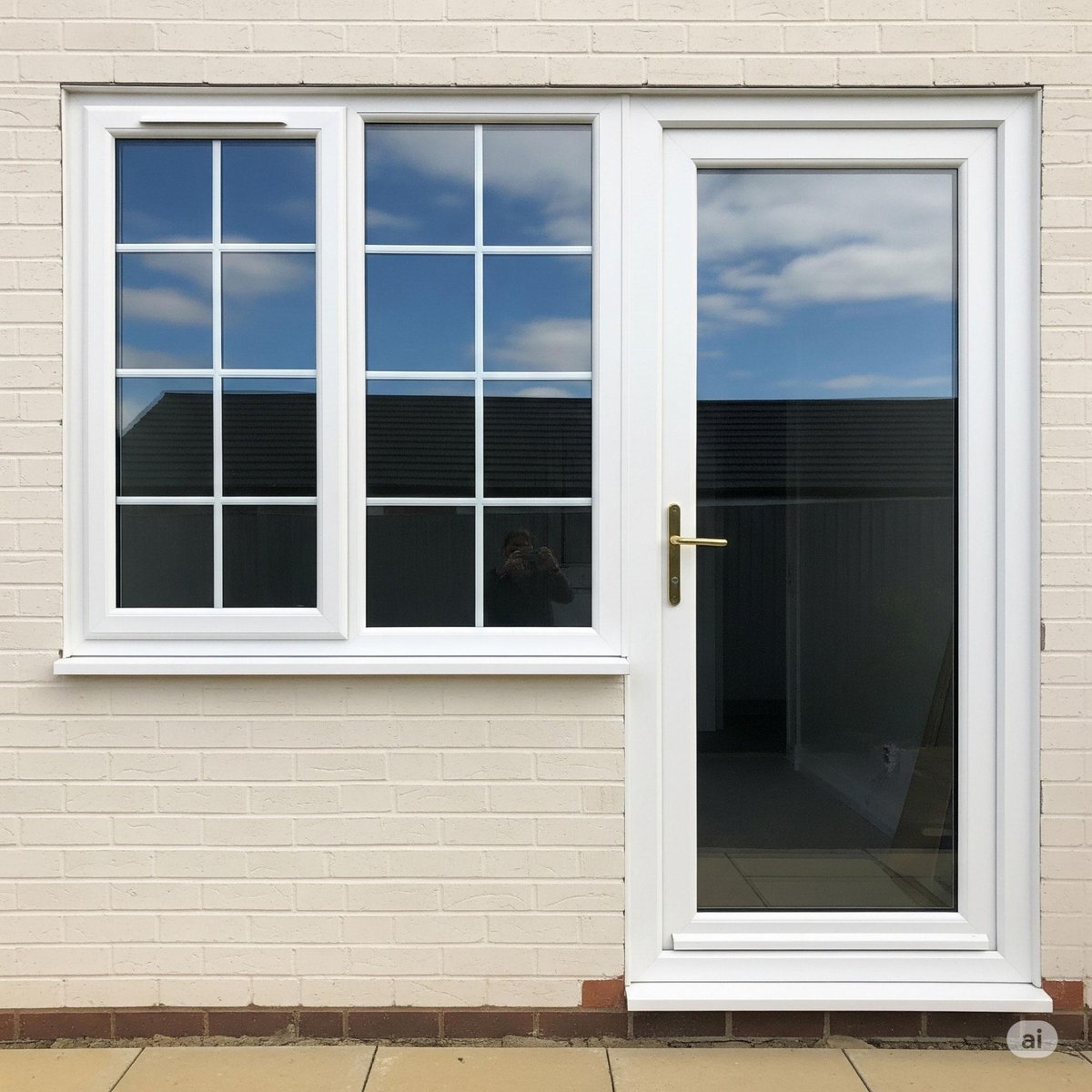
Direct Powder-to-Product Extrusion: Eliminating Pelletizing Line Investments
After compounding, PVC is typically fed into the system as a dry blend powder. A parallel counter-rotating extruder can process this powder directly into the final product (pipe or profile), bypassing the need for a pre-pelletizing step.
This direct extrusion process eliminates the repeated heating cycles caused by pelletization, effectively reducing the cumulative thermal history of the material before it reaches the die head. This not only slashes electricity consumption per kilogram of product but also saves processing plants the massive capital expenditure of an independent pelletizing line. In high-capacity heavy industrial operations, this direct process drastically optimizes the profitability margins calculated per meter of finished product.
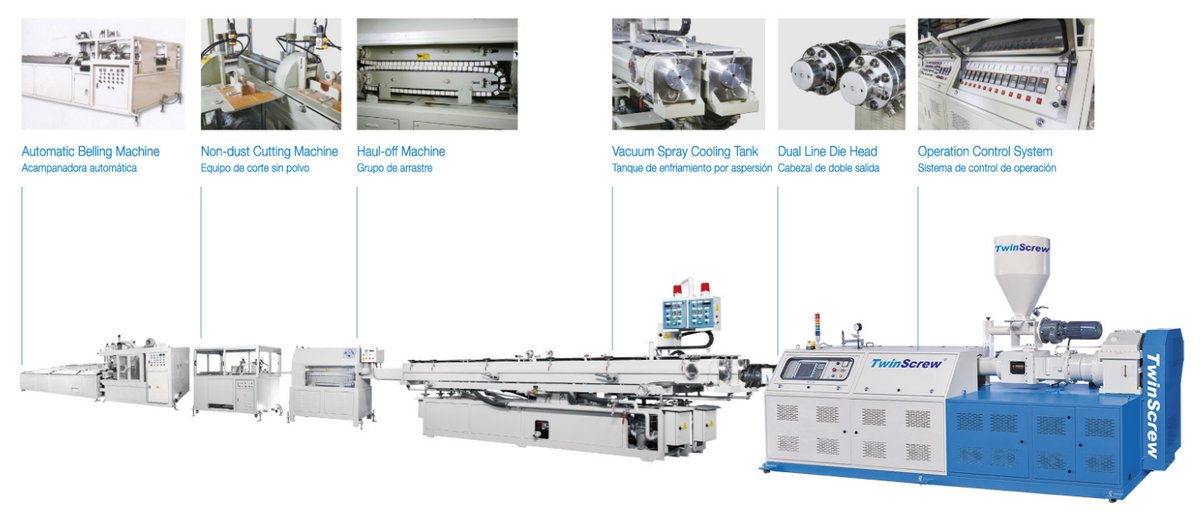
Extreme Output Stability Under Continuous Heavy-Duty Loads
A pipe or profile production line operating more than 20 hours a day cannot tolerate wall thickness drift caused by pressure fluctuations. The positive displacement transport mechanism mentioned earlier maintains output stability under continuous, high back-pressure loads in a way that traditional models relying on drag-flow simply cannot match. This is the operational reason why counter-rotating extruders consistently win out in direct extrusion applications.
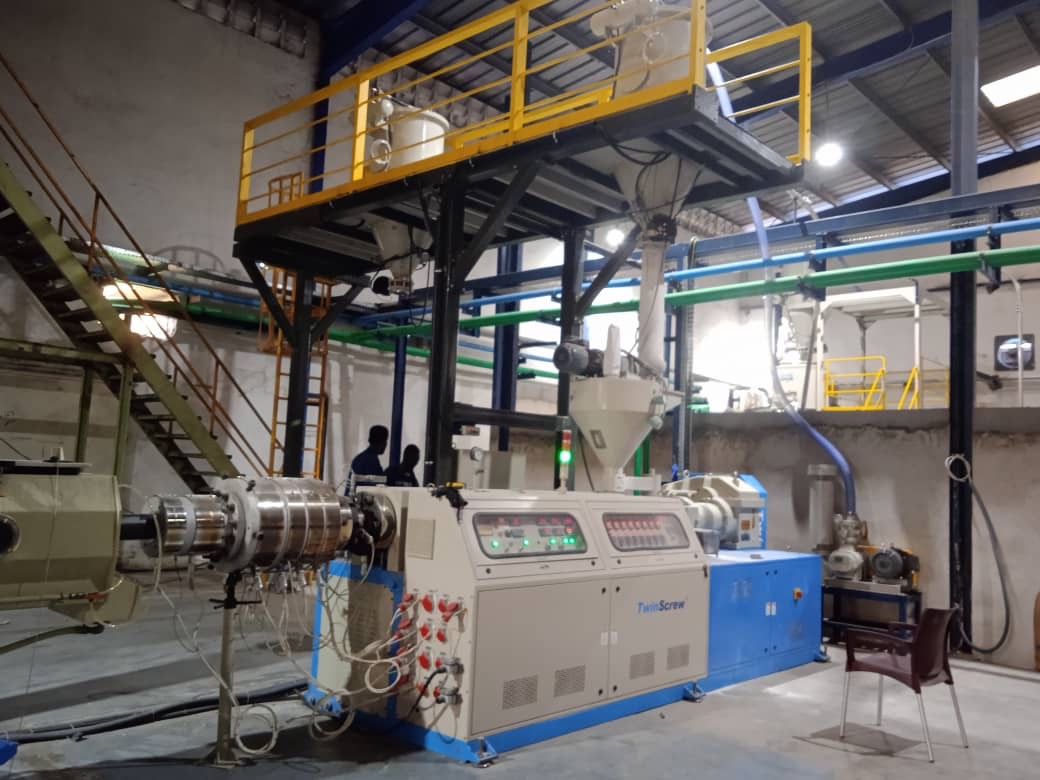
Ultra-High CaCO3 Filler Tolerance for Maximum Cost Efficiency
To control costs and enhance structural rigidity, PVC pipe and profile formulations often incorporate heavy doses of CaCO3, with loading levels ranging from 30 phr to upwards of 80 phr depending on the application. Because parallel screws maintain a uniform core diameter along their entire length, their wear resistance against highly abrasive CaCO3-filled compounds is vastly superior to that of conical screw designs. In a conical configuration, the screw tips have the smallest diameter yet are positioned exactly where internal machine pressure and die pressure peak, exposing them to an incredibly high risk of accelerated wear.

Extruder Comparison: Parallel Counter-Rotating vs. Co-Rotating Twin Screw
The primary reason the parallel counter-rotating twin-screw extruder has become the definitive production standard for PVC pipes and profiles is that its operational mechanics are inherently engineered for thermally sensitive materials like PVC.
Parallel counter-rotating designs operate at low screw speeds—typically maintained between 20 and 60 rpm for rigid PVC pipe production. The material is robustly conveyed via positive displacement through enclosed C-shaped chambers, meaning shear input is exceptionally low and controllable. Consequently, die pressure remains extraordinarily stable and is unaffected by minor fluctuations in screw speed. This creates the ideal processing environment for PVC: smoothly and reliably extruding powder into high-quality pipes or profiles without exceeding the material's thermal window.
In contrast, co-rotating twin-screw extruders operate at very high screw speeds—typically between 200 and 900 rpm—generating high shear forces through a figure-8 flow path. While this characteristic makes co-rotating systems excellent for compounding, masterbatch production, and reactive extrusion, using them for the direct extrusion of PVC introduces an excessive amount of shear heat. With virtually no thermal buffer zone, this high shear causes immediate material degradation, resulting in yellowed and brittle finished products.
The matrix below illustrates the suitability of both architectures across common processing applications to help guide your machine selection:
| Application | Parallel Counter-Rotating Twin Screw Extruder | Co-Rotating Twin Screw Extruder |
|---|---|---|
| Rigid PVC Pipes (Direct U-PVC Extrusion) | ✅ Industry Standard / Top Choice | ❌ Shear is too high; risks material degradation |
| Direct Extrusion of PVC Window & Door Profiles | ✅ Industry Standard / Top Choice | ❌ Shear is too high; unsuitable |
| WPC (Wood-Plastic Composite) Decking & Board Profiles | ✅ Highly Suitable | ❌ Material burns easily; unsuitable |
| PBAT / PBS Biodegradable Plastic Compounding | ✅ Highly Suitable | ✅ Suitable |
| Plastic Masterbatch & Color Concentrate Compounding | ❌ Not the primary purpose of this design | ✅ Industry Standard / Top Choice |
| Polymer Reactive Extrusion & Polymer Blending | ❌ Not the primary purpose of this design | ✅ Industry Standard / Top Choice |
Parallel vs. Conical Counter-Rotating: Choosing the Right Screw Geometry for Your Production Needs
While both parallel and conical counter-rotating extruders utilize the same opposite-rotation principle, their screw geometries are fundamentally different. Before finalized equipment procurement specifications are locked in, investing the time to evaluate how this geometric divergence impacts throughput, filler tolerance, and long-term maintenance costs is highly recommended.
- Conical Counter-Rotating Machines: The screws taper from a large diameter at the feed zone down to a smaller diameter at the discharge end. This conical shape naturally creates a compression stage for the material and simplifies the alignment of the gearbox shafts, leading to a less complex drive design and a lower initial equipment cost. This setup is well-suited for small-to-medium profiles and smaller-diameter pipe production with moderate throughput demands.
- Parallel Counter-Rotating Machines: The screws maintain a uniform diameter across their entire length, allowing for a longer length-to-diameter (L/D) ratio. The standard configuration for rigid U-PVC pipes typically ranges between 26:1 and 32:1, while highly filled or Chlorinated Polyvinyl Chloride (CPVC) formulations may require even longer ratios. A longer processing length means the material spends more time undergoing homogenized melting and vacuum degassing, ensuring the compound achieves flawless plasticization before it reaches the die head.
Selection Matrix for Comparison:
| Key Selection Criteria | Parallel Counter-Rotating Design | Conventional Conical Counter-Rotating Design |
|---|---|---|
| Target Production Capacity | Exceptionally High—ideal for large-diameter pressure pipes and high-output profile lines | Lower—best suited for small-to-medium profiles and standard small-diameter pipes |
| L/D Ratio Flexibility | High—process adjustments can be customized via barrel and screw lengths | Low—constrained by conical geometry; length and compression ratios are relatively fixed |
| CaCO3 Filler Loading > 60 phr | Excellent wear life due to the thick, robust screw core at the discharge end | High risk of rapid wear and distortion at the high-pressure zone due to the small screw tip diameter |
| Machine Footprint | Longer | More compact footprint |
| Initial Capital Investment | Higher | Lower |
| Formulation & Tooling Versatility | Broader—capable of handling diverse and challenging processing formulations | Narrower |
For large-diameter PVC pressure pipes, high-output window profile lines, or formulations with heavy filler loads, a parallel design represents the superior specification choice for long-term return on investment. If your production expansion plans involve high-volume piping, we recommend reading our blog PVC Pipe Manufacturing Machine and Production Line Guide, for comprehensive layouts on establishing high-efficiency single and dual-strand manufacturing setups.
Critical Technical Specifications to Verify Before Purchasing a Parallel Counter-Rotating Extruder
When international buyers discuss specifications with our engineering team with a clear intent to purchase, we find that clarifying the following core parameters beforehand streamlines the selection process. It ensures you secure a production configuration that hits your performance targets within budget:
- Screw Diameter: This is the primary parameter that defines your baseline production capacity. However, the relationship between diameter and throughput is non-linear; output scales proportionally to the square of the diameter. Therefore, your target throughput (kg/h) must be analyzed alongside the bulk density of your formulation and the specific throughput of the screw geometry to accurately establish the minimum required screw diameter.
- L/D Ratio (Length-to-Diameter): This determines the residence time and plasticization quality of the material within the barrel. Standard U-PVC pipe configurations generally use a 26:1 to 32:1 ratio. Challenging CPVC formulations demand strict temperature control and extended homogenization times, which usually require a higher L/D ratio. Conversely, Wood-Plastic Composites (WPC) with a high wood flour content benefit immensely from extended screw mixing zones.
- Gearbox Torque Rating and Speed Range: This factor has a direct physical correlation to your formulation’s melt viscosity. Rigid U-PVC dry blends typically process smoothly at screw speeds between 20 and 40 rpm. The gearbox’s rated torque must be robust enough to handle the maximum instantaneous back-pressure generated by complex die tooling systems, rather than just the steady-state average operating load. This buffer is critical to prevent fatigue failure at the screw-shaft interface.
- Barrel Heating Zones and Vacuum Venting Configuration: Standard rigid PVC powder typically requires only a single atmospheric vent port. However, if your formulation includes WPC with a wood flour content exceeding 40 phr, recycled PVC streams containing residual moisture, or biodegradable blends, the barrel must be outfitted with independent vent ports paired with high-performance vacuum pumps to guarantee efficient degassing.
- Design Die Pressure Range: Complex profile dies (such as multi-cavity window frame tooling or co-extruded foam-core pipe dies) exert a much higher and more volatile back-pressure on the extruder than simple single-cavity dies. The geometry of the screw tips and the torque rating of the gearbox must be perfectly aligned with the manufacturer's maximum back-pressure tolerances during initial technical consultations.
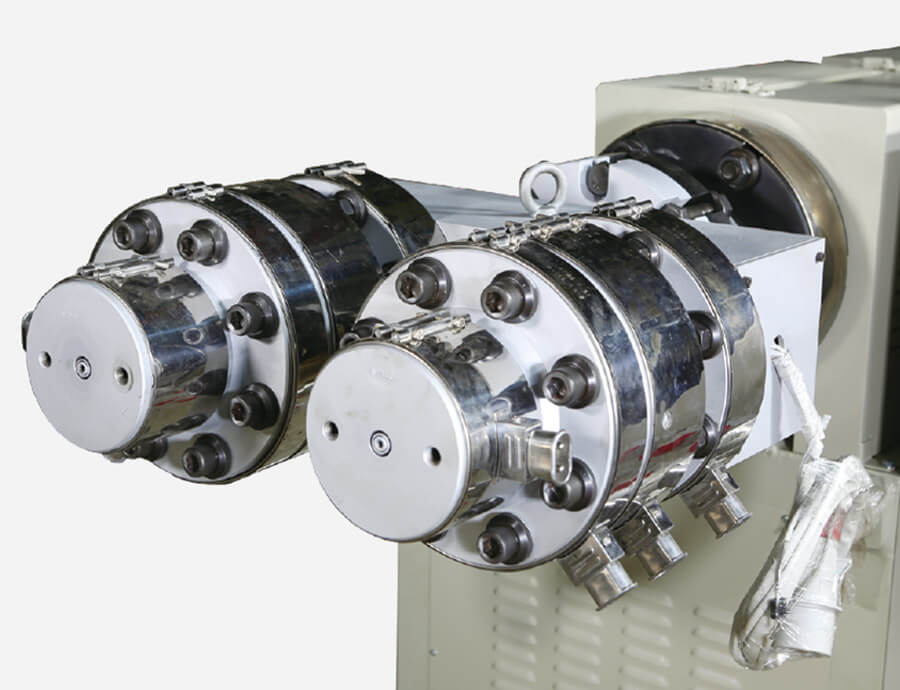
3 Essential Questions to Ask Your Machinery Vendor Prior to Procurement:
No matter how impressive a written specification sheet looks, the long-term operational lifespan of a production line comes down to manufacturing precision. Use these targeted inquiries to vet your supplier's gearbox and barrel construction:
- "What are the precise geometric tolerances of the screws?" If the clearance gap between the screw flights and the inner barrel wall is too wide, it causes severe "melt backflow" during continuous operation. This leads to poor conveying efficiency, sharp die pressure fluctuations, and spikes in melt temperature that burn the material. Ensure the manufacturer guarantees consistent tolerances along the entire length of the screw, rather than just at selected measurement reference points.
- "What material is used for the barrel bimetallic liner?" When processing formulations heavily filled with calcium carbonate, a standard nitrided steel barrel liner will wear down rapidly. Verify if the manufacturer can provide a bimetallic or tungsten carbide reinforced alloy liner, and request a formal assessment of the expected lifespan of the screw and barrel based on your specific formulation.
- "Is the gearbox engineered specifically for counter-rotating twin-screw applications?" The rotation of parallel counter-rotating twin screws exerts severe, cyclical, and asymmetrical reverse stresses on the output shafts. Standard, general-purpose industrial gearboxes cannot withstand these forces over the long haul. Insist on verification of a dedicated engineering design for the gearbox to eliminate the risk of shaft fractures or gear tooth failure during years of continuous operation.
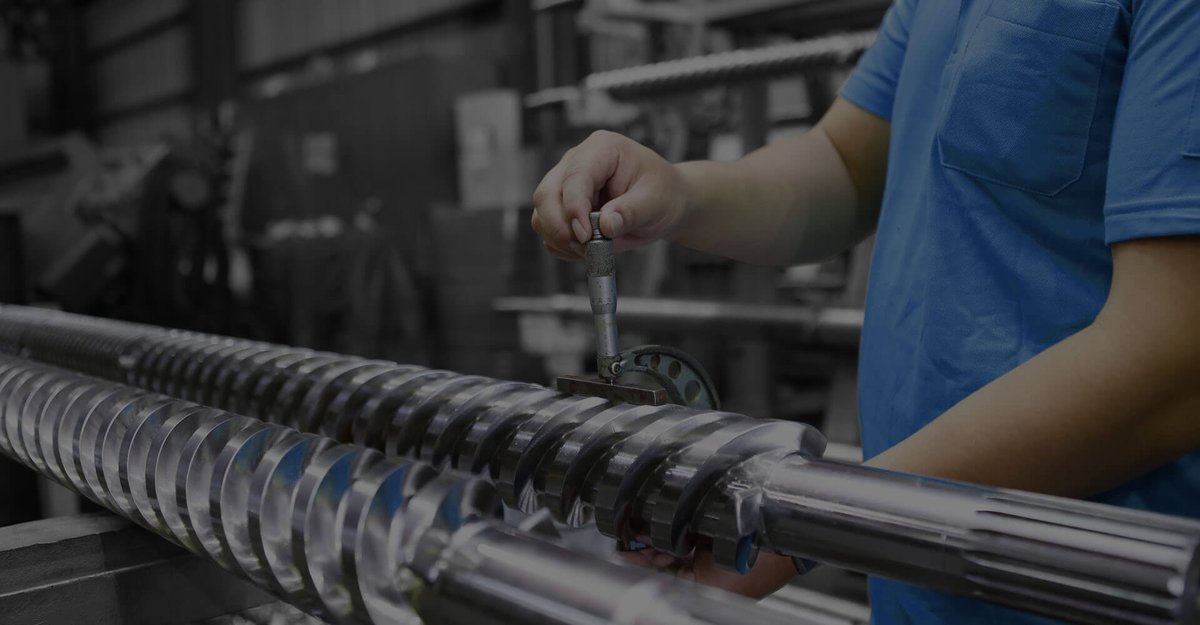
16 Years of Proven Longevity on the International Manufacturing Floor
While the technical procurement metrics detailed above provide the scientific foundation for buying a machine, time delivers the ultimate verdict on engineering quality.
A prominent PVC pipe manufacturer in Brazil continues to run a parallel counter-rotating twin-screw extruder manufactured by us back in 2009 at full production capacity. This industrial manufacturer originally purchased the machine on the secondary market and has run it continuously for over a decade since taking ownership.
In 2025, they reached out to our headquarters in Taiwan to place their very first factory-direct parts order in the machine's 16-year operational history. They only needed to replace a standard set of gearbox bearings as part of a routine preventative maintenance cycle. The current owner of the Brazilian manufacturing facility offered a resounding endorsement of the equipment's performance:
"The long-term performance of this extruder has been absolutely exceptional. The structural rigidity and durability of the gearbox, in particular, are simply incredible."
Those OEM replacement bearings, matching the original digital blueprints perfectly, were shipped directly from Taiwan to Brazil. We take immense pride in maintaining the complete production blueprint archives for every single machine that leaves our facility. No matter where your equipment is running worldwide, and regardless of how many times it has changed hands, our professional technical support and genuine factory parts remain accessible. This enduring support represents the sustainable competitive advantage that precision Taiwanese manufacturing delivers to the global industrial sector.
For the complete breakdown of this case study—including the logistical details of cross-border parts supply for legacy equipment—read the full article: Parallel Counter-Rotating Twin Screw Extruder Runs for 16 Years: Real-World Experience from a Brazilian PVC Pipe Manufacturer.
Frequently Asked Questions (FAQ)
To assist you with rapid troubleshooting during plant setup and production scheduling, our application engineering team has compiled answers to the most common questions encountered on the front lines of PVC extrusion:
Q1: Can a counter-rotating twin-screw extruder directly process recycled PVC?
Yes, but the barrel and screw configurations must be customized. Recycled PVC streams (such as regrind or crushed scrap) typically exhibit higher moisture content and highly volatile bulk densities. Mechanically, the extruder must be equipped with a high-efficiency vacuum degassing system to pull out moisture vapor. Additionally, the geometry of the screw's feed zone must be redesigned to accommodate the looser volumetric weight of recycled material. Because recycled PVC has already accumulated a prior thermal history, the stabilizer and lubricant ratios in the formulation should be re-evaluated to prevent material burning during secondary processing.
Q2: How do I determine the optimum L/D ratio for a rigid PVC (U-PVC) pipe extrusion process?
The ideal length-to-diameter ratio is dictated by your formulation matrix and throughput targets, not simply the diameter of the pipe being produced.
- L/D 26:1 to 28:1: Perfectly suited for standard U-PVC pressure pipes with a CaCO3 filler content below 50 phr. This length provides excellent, reliable plasticization for standard compounds.
- L/D 30:1 to 36:1: Required for high CaCO3 filler formulations, temperature-sensitive CPVC processing, or high-tier pipe manufacturing with strict melt homogeneity demands. The extended processing length ensures the compound is thoroughly plasticized before entering the die.
Q3: If we experience inconsistent PVC pipe wall thickness (out-of-tolerance dimensions) on the production floor, where should we begin troubleshooting?
Inconsistent wall thickness is typically caused by unstable die pressure, minor fluctuations in screw speed, or an uneven melt temperature profile. Mechanically, the most common culprit is an enlarged clearance gap between the screws and the barrel liner resulting from long-term wear, which allows melt backflow and pressure pulsations to develop. If the clearance measurements fall within allowable tolerances, verify the precision of the temperature control units across all barrel heating zones, or evaluate whether your current formulation requires a longer processing length to achieve thermal homogeneity.
Q4: Since both parallel counter-rotating and conical counter-rotating extruders use opposite rotation, how do I choose between them accurately?
The deciding factor comes down to how the screw geometry limits your maximum throughput and impacts your long-term wear lifecycle.
- Parallel Counter-Rotating Design: Features uniform screw diameters along the entire length, enabling exceptionally high output capacities. The robust screw core delivers superior wear resistance when handling abrasive formulations with over 60 phr of CaCO3 filler, making it the premier choice for large-diameter pipes and high-volume profile lines.
- Conical Counter-Rotating Design: The screws taper from large to small, which limits the processing length. The high-pressure discharge end falls right where the screw diameter is smallest and most vulnerable to wear. However, its lower initial acquisition cost makes it a practical option for small-to-medium profile production with moderate output targets.
Q5: What is the fundamental difference in processing performance between co-rotating and counter-rotating twin-screw extruders when handling PVC?
The difference hinges entirely on the material's thermal sensitivity.
- Co-Rotating Twin Screws: Run at high velocities (200–900 rpm) and rely on high shear forces to blend compounds. This makes them the definitive choice for plastic pelletizing and masterbatch compounding. However, using them for direct PVC extrusion generates excessive shear heat, leading to rapid material degradation and burning.
- Counter-Rotating Twin Screws: Run at low speeds (20–60 rpm) and utilize enclosed C-shaped chambers to move material via positive displacement. This mechanism transfers the compound powerfully yet gently with minimal shear heat, protecting thermally sensitive PVC powder and allowing direct extrusion into high-quality finished products.
Looking to Maintain High-Efficiency Output on Your PVC Production Lines for Decades?
Whether you are designing a brand-new PVC pipe manufacturing plant, expanding your existing throughput, or replacing aging machinery, we can help you identify the optimal equipment configuration for your goals. We have been manufacturing parallel counter-rotating twin-screw extruders in Taiwan since 1988, with over 3,000 installations operational in more than 40 countries. When you get in touch with our team, we begin by discussing your specific application and current setup. This ensures your machine specifications are tailored to your actual operational needs rather than pulled from a standard catalog template.
Feel free to email us with your production specifications. If you are in the initial research phase, you can also review our TW Series Product Page (PVC Counter-Rotating Twin Screw Extruder) to examine detailed specifications across our models. We look forward to collaborating with you.
Related reading: PVC Twin Screw Extruders: A 3-Minute Guide | Types of Twin Screw Extruder | PVC Pipe Making Machine Production Line
Related Articles


